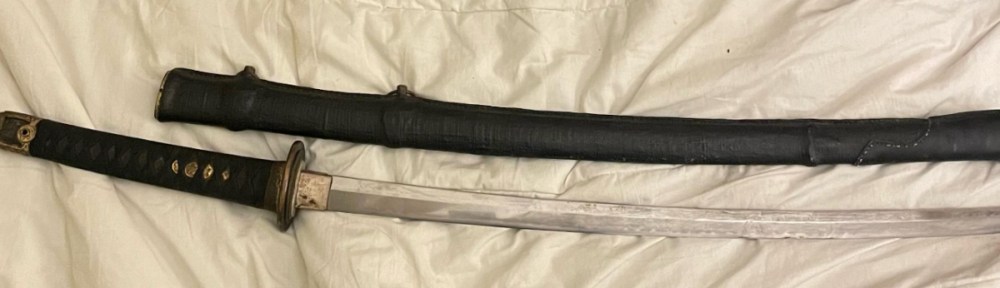
In Rokugan, iaijutsu duels involve two competitors, each armed with a katana (and only a katana; all other weapons are forbidden by the Emperor’s Law and Kakita’s famous treatise, The Sword). laijutsu duels are often, but not always, fatal to one or both competitors, and are never occasioned by minor insults or passing arguments. They are the pinnacle of swordsmanship, the ideal of the samurai caste, and the true mark of a master kenshinzen, or Swordsman.
Once a Swordsman has decided he will challenge his opponent to an iaijutsu duel, a formal procedure must be followed. First, the Swordsman initiating the duel must get permission from his master (daimyo, taisa, or other feudal lord) to request the duel. Sometimes, if the master knows that his servant will lose (and probably die), he will withhold his permission. An honorable warrior’s purpose is to obey his lord, and his life belongs to that lord. It is not his place to destroy his lord’s prized possessions, including his own life.
If the master of the challenging Swordsman agrees, the Swordsman must then seek out his opponent and formally request a duel. He must state the reason the challenge has been offered, and he must precisely name the terms of victory and defeat. For example, two Swordsmen may duel for the right to lead a military legion, or may fight over an insult. (“My grandfather died in battle, and I will prove the truth of my words!”)
If the second Swordsman agrees, he also must approach his master for permission to accept the duel. Again, that master may refuse his right to accept, as the Swordsman’s life is his possession. Worse, he may refuse that Swordsman’s right to accept the challenge and name another Swordsman who may accept. (“Your grandfather deserves to be defended by his oldest son, Daori, and thus I will accept the challenge personally.”) It is considered rude for a lord to agree to a challenge and then give the acceptance to someone who is not involved with the original incident. (The daimyo of the Crane, for instance, cannot agree to a Lion-Crane duel and then have Yoritomo Kenji of the Mantis accept the fight.)
The challenged Swordsman has the right to name the place where the duel will occur, anywhere within the Empire (but it must be in a public place, with witnesses from both camps). He also has the right to name the time when the duel will be fought, so long as it is no more than one year from the date of the duel’s acceptance.
Once the time of the duel has come, the contest may commence. As both Swordsmen take their stance a few steps away from each other, both must make a Perception Check with a TN of 10. If the roll is successful, they may determine one of several facts:
- the opponent’s School and Mastery Level (if it is not already known),
- the opponent’s Rank in Finesse,
- the opponent’s Rank in the First Strike (Kenjutsui) Knack,
- the opponent’s Rank in Panache, or
- the number of Drama Dice the opponent currently has.
For every Raise a duelist takes on his Perception roll, he can discover another fact about the opponent.
Example: Ikoma Hori is about to enter an iaijutsu duel. He wants to know more about his opponent, so he makes a Perception roll, declaring one Raise, to learn his opponent’s Rank in Finesse and First Strike (Kenjutsu). He rolls a 17, enough to beat the TN of 15 (base 10 + a Raise for additional information). Hori discovers his opponent has a Rank of 4 in Finesse and a Rank of 3 in First Strike (Kenjiutsu).
After the Perception Checks have been made, but before any other action takes place, either opponent may declare that the other samurai is the victor. This is not an act of cowardice; recognizing the winner without spilling blood is always a noble act. If both opponents disengage after one has declared the other the winner, the duel is over. However, if one opponent chooses not to disengage, he has committed a horrible and dishonorable act. It is most likely that the outcome of the duel will be the death of one, or both, duelists. A warrior who does not know when he is beaten has no respect for his lord’s possession (namely, his life) and will die in dishonor and disgrace.
If both opponents agree to continue (i.e., if their attributes are so close that the outcome is not inevitable), the duel proceeds as follows:
- The Swordsman who rolled higher on his Perception roll decides who will have the option of Focusing or Striking first. In the event of a tie on this roll, the duelist with the higher Rank in Wits may make the choice. If that is also a tie, the duelist with the higher Rank in Panache may make the choice. If that is also a tie, roll a single die to randomly determine who makes the choice.
- At the beginning of a duel, the TN for either samurai to strike his opponent is 5, plus any armor bonus (however, most Swordsmen remove their armor for an iaijutsu duel).
- If the first opponent chooses to Focus, he voluntarily increases the TN by 5,
- After the first opponent announces “Focus,” the second opponent may also choose to Strike or Focus. If he Focuses, he also increases the current TN by 5.
- A duelist may Focus a number of times equal to his Rank in Panache for “free,” but may continue to Focus by spending Drama Dice (one for each additional declaration of “Focus”).
Focusing continues until one opponent declares “Strike.” When a duelist announces “Strike,” his opponent rolls Finesse + First Strike against the last TN he Raised to; he may take extra Raises on top of this number if he wishes, and may spend Drama Dice on his roll.
If the attacker rolls under this TN, he misses. In this case, or if the first attack did not result in a Dramatic Wound (indicating the drawing of blood) or Knock Out the opponent, that opponent now has an opportunity to Strike. The second duelist rolls his attack at the last TN he Raised to (which should be 5 lower than his opponent’s TN, notwithstanding any extra Raises the opponent took on his Attack Roll).
After a duelist makes a successful attack roll, he rolls damage as if he had hit someone in normal combat. Remember that Raises increase the number of dice rolled for damage; in this case, the duelist gets credit for all the Raises made by both duelists.
Example: Ikoma Hori chose to go forward with the iaijutsu duel, and successfully struck his opponent after the TN had been Raised from 5 to 30. Hori’s Brawn is 3, so his Damage Roll would be 3k2 (the katana’s Damage Rating) + 3k0 (for Hori’s Brawn) + 5k0 (for the five Raises taken during the duel), for a total of 11k2, which becomes 10k3.
If the duel is to first blood, there may already be a winner before the second duelist even rolls his attack, and the duelists may be satisfied. If both duelists are still conscious after they trade their first blows, what happens next depends on the combatants. If the duel was simply a contest of skill, a winner may have already been determined. On the other hand, if the duel is to the death, the duelists continue their fight using standard rules instead of those for an iaijutsu duel.
At the end of the duel, the winner gains a number of Reputation Points equal to his opponent’s Mastery Level plus one. The loser gains only one Reputation Point (posthumously, if necessary).
 Poisoned Shadows