Country of Origin: Avalon (Highland Marches)
Salon: Kirkwall (Large)
Founded: 1256
Description: When High King Robert II established the MacDuff line in 1251, he knew that the fledgling clan would face many challenges to its authority, both from within the Highland Marches and from enemies outside the Marches’ borders. He commissioned one of his most trusted vassals, James Carlyle, with securing the safety not just of the High King himself, but for his brothers, cousins, and heirs in perpetuity. Since the MacDuffs could not claim dominion over another clan, the Calryles were granted their freedom and elevated to the status of minor nobility. In return, James pledged his and his family’s loyalty to the MacDuffs in perpetuity. It is said that so long as a MacDuff sits on the throne of the Highland Marches, a Carlyle will be standing at this side…and have his back.
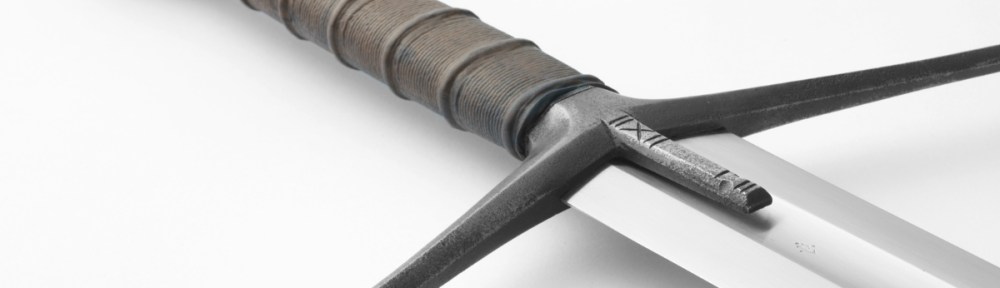
One of the first things Laird Carlyle did after being ennobled was establish a formal academy to train his followers in the arts of swordplay and defense (not just of themselves, but of others). Over the course of several years, James’ sons developed a set of techniques designed to leverage their prodigious strength to defend the MacDuffs from harm. The Carlyle School focuses on the use of the claymore: an unusual choice for a group of bodyguards. Rather than addressing the weaknesses of the sword, however, the Carlyle School leans into them. A Carlyle Swordsman wields his claymore proudly, swinging hard and striking harder, while utilizing a uniquely-spaced two-handed grip (the hilt is long enough to allow for a gap of two or three inches between the wielder’s hands) for leverage, providing a little more speed than most heavy weapons offer. In addition, a Carlyle Swordsman will pivot around a his charge when he can, building up speed for a quick counterattack, especially when he has been missed by an overeager opponent. Thus, Carlyle Swordsmen can be deceptively fast and unpredictable, despite their heavy weapons. Their training regimen consists of running uphill, throwing stones, climbing cliffs, and jumping stone walls.
The weakness of the Carlyle School is that it has a defensive focus: a rarity among Schools using heavy weapons in general and claymores in particular. A Carlyle Swordsman hangs back to protect his charge and cannot stray too far from whomever he is protecting. This limits his movement, allowing a shrewd opponent to stay just out of range (making him harder to strike) until it is time for attack. When that time comes, Carlyle teachings focus on defending the charge, which leaves them susceptible to being struck themselves.
Basic Curriculum: Bodyguard, Heavy Weapon
Knacks: Beat (Heavy Weapon), Disarm (Heavy Weapon), Exploit Weakness (Carlyle), Pommel Strike (Heavy Weapon), Sidestep
Revised Swordsman Knack: Beat. When attacking an enemy, you can declare a Beat. You roll Brawn + Beat, and must roll a number of Raises equal to your enemy’s Brawn in order for your Beat to be successful. If you are successful, he cannot avoid the attack using any Active Defense. The Raises taken on this roll add Unkept Dice to your damage roll as usual.
Apprentice: A Carlyle Swordsman’s grip allows him to swing his massive weapon surprisingly quickly: a skill that improves with experience. Carlyle Swordsmen may add twice their Mastery Level to their Initiative Total in every Phase of combat.
The Carlyle School is not intended for wide dissemination, so it is unlikely to be submitted to the Duelist’s Guild for Sanction (and the revamped Swordsman’s Guild would not be interested in sanctioning it at any rate). In lieu of Membership in a Guild, a Carlyle Swordsman receives a free Rank in one of his Swordsman Knacks, or in the Interpose Knack of the Bodyguard Skill, if he wishes.
Journeyman: Having learned to use leverage for speed as an Apprentice, a Carlyle Journeyman adapts his training to use it for power, whether he is knocking an opponent’s weapon out of alignment, battering it out of his hand, or simply bashing the opponent in the face. Journeymen receive a a free Raise on all uses of his Beat, Disarm, and Pommel Strike Knacks,
Master: Masters of Carlyle adapt their Journeyman training beyond their special tricks to encompass all their attacks: when they hit, they are capable of inflicting a lot of damage. When taking Raises for damage on any Attack Roll (including the use of their Swordsman Knacks), rather than adding Unkept Dice (+1k0) to his Damage Roll for each Raise taken, a Master may elect to add Kept Dice (+1k1) to his Damage Roll for every two Raises taken. Thus, taking four Raises on his Attack Roll allows the Carlyle Master to increase his Damage Roll by 4k0 or 2k2 (or, for that matter, by 3k1 if he chooses to split the effect of his Raises).
 Poisoned Shadows